FRANKLIN, Kan. — Send a message through time!
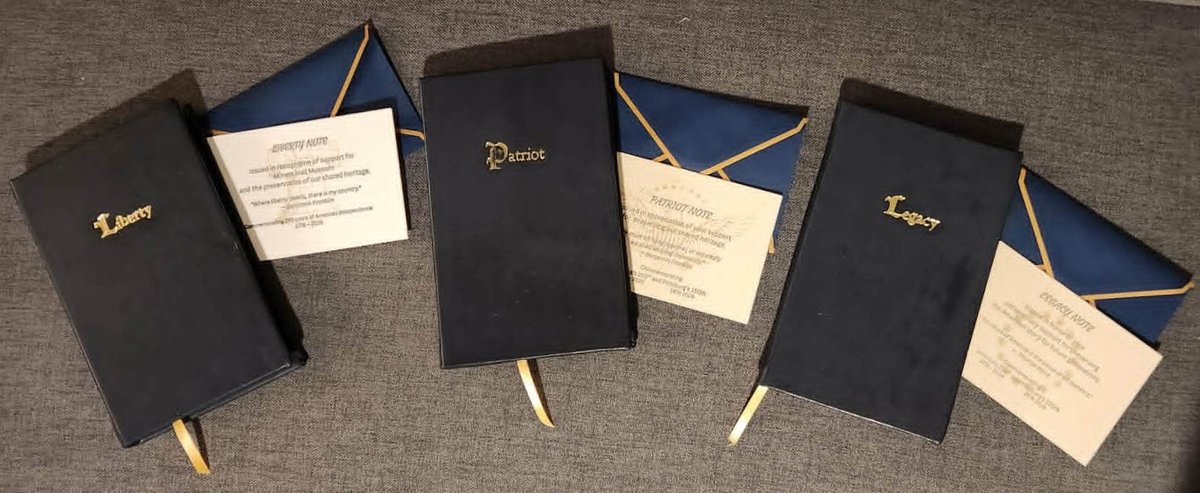
As the area celebrates America’s 250th Anniversary and Pittsburg’s 150th, Miners Hall Museum has created three commemorative ledgers that will be placed in a vault at the end of 2026 to be opened in the future — like a time capsule.
The project is the idea of Phyllis Bitner, chair of Miners Hall Museum in collaboration with local artist and author Olive Sullivan of Sullivan Books and her partner, Angelica Abshire, of Wyrd Hoard Letterpress & Photography. Boxcar Press in Syracuse, New York, has also joined the project.
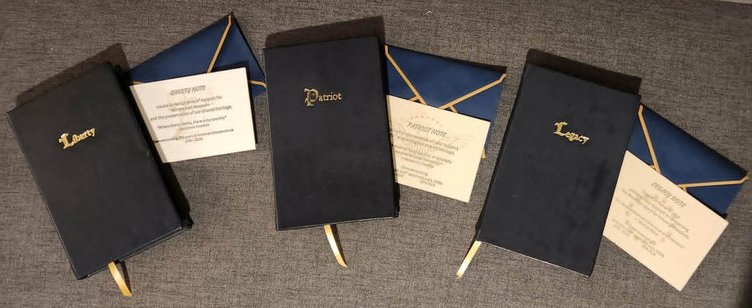
Sullivan created the ledgers. Each offers an opportunity to write a message and leave your name and/or story as part of this historic, year-long celebration and will be preserved as a lasting record of the people who helped honor and support the preservation of our shared history.
The ledgers made their first appearance at “A Night in Philadelphia” and will be available at Miners Hall beginning on May 4, where they will remain on display during regular business hours (Monday through Saturday from 10 to 4) until December 30. At that time, the ledgers will be closed and preserved for future generations.
After signing one or more of the ledgers, visitors receive a handcrafted keepsake card, courtesy of Abshire. Each commemorative card is a work of typographic art using the centuries-old letterpress method once used by printers like Benjamin Franklin. Produced on a vintage press, no two cards are exactly alike, making each one a unique tribute to our shared mining heritage.
Sullivan said she is especially proud of the commemorative cards and the artistic skill that goes into making them.
“As a keepsake celebrating our region’s mining heritage, they are worth treasuring,” Sullivan said. “Not only do they commemorate our shared history, they do so by using an historical art form that is making a resurgence in the printmaking world.”
The artform Sullivan references is called letterpress. Invented by Johannes Gutenberg in the 1440s, letterpress uses individual pieces of type that are assembled to create a block of text. Ink is applied, and then the paper is pressed onto the type.
“This was the basic method of printing all the way until the 19th century,” Sullivan said. “When Pittsburg celebrated its 100th anniversary, the newspapers would have used some form of letterpress printing. When Benjamin Franklin wrote his ‘Poor Richard’s Almanac’ and our founding fathers were battling England in the press, they used letterpress.”
Abshire used a combination of old and new techniques to create the Miners Hall cards.
First, each card was run through a vintage Vandercook “0” press four different times — two impressions on the front, and two on the back. Instead of using individual type, Abshire used printing plates made by Boxcar Press in Syracuse, New York. The plates are made of polymer plastic — historically, they would have been zinc or lead. The plate is inked and put into the press, where the paper is laid on top, and a roller runs across it to create the impression.
Visitors are encouraged to write messages or stories about their lives and families. There is a small fee, depending on the number of lines written: $5 for two lines in the Patriot Ledger; $10 for four lines in the Liberty Ledger; or $25 for an entire page in the Legacy Ledger.
Be a part of history and share your voice with future generations.
This reporting is made possible, in part, by the Support Local Journalism Project Fund. Learn more at: southeastkansas.org/Localnews