By allowing ads to appear on this site, you support the local businesses who, in turn, support great journalism.
10. Chess pieces and ill tidings
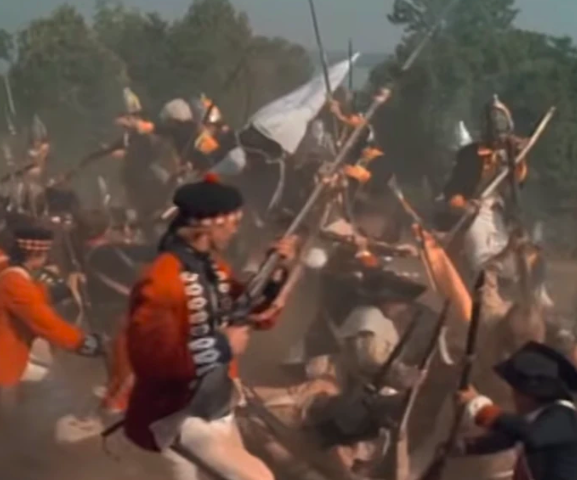
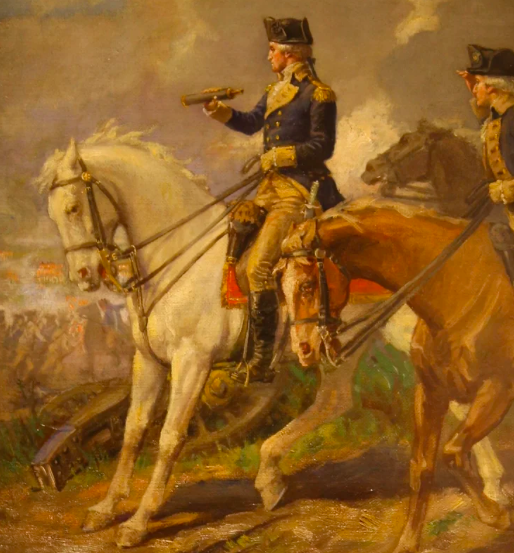
Washington on Long Island, 1776. By John Ward Dusmore.
Washington on Long Island, 1776.

Editor’s note: In the style and spirit of Silence Dogood and in acknowledgement of the upcoming United States Semiquincentennial, we look at the founding of this nation through the eyes of the fictional Albert Louder and others and explore the conflict from a personal perspective.

May 22, 1776

Dearest Compatriots,

Please forgive my absence these past few weeks but circumstances have been changing rapidly, to include my own relocation from Boston to the island of Manhattan as I have since volunteered my services to the Army as a Quartermaster’s Clerk, leaving me little time to properly correspond.

Since penning my last missive in March, we have learned that an old friend, young Ben from Connecticut, or General Arnold as I must refer to him now that I am in the employ of the Army and such familiarities are not condoned, has written to inform us that he has quit his siege of Quebec and is retreating back to Ticonderoga, the site of his first victory.

We have also received word of the sighting of British troops along the Carolina coast that were withdrawn from Boston in January. Their objective is unknown as they have not made landfall, but it is believed they intend to cut off our support from the Southern Colonies.

There is a growing consensus in favor of declaring full independence from that ill-tempered rascal King George. There is nary a New England man who is not in favor of severing ties to the throne, especially among those who stood on Breed’s Hill and have since manned the siege lines around Boston these long months.

In early April, Washington moved the Army to New York out of fear of an attack by the King’s Army. Our own forces, while much improved since the General took over in July, are still in a state of disarray and though morale is high since seeing off the redcoats from Boston, is still lacking the proper supplies and battle discipline to see off any coordinated attempt to seize the island by his majesty’s forces.

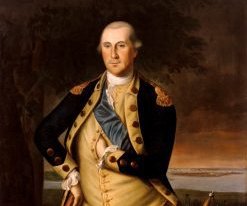
As a clerk, I often see the General in his duties, though from afar as I am not a part of his personal staff, and from what I can ascertain, the General is quite a capable, and physically imposing, man of forty-ish who has the unique ability to collect around him the most remarkable menagerie of followers; from pacifist Quakers, booksellers to experienced soldiers and ambitious young men looking for glory and status. The one quality they all share is competency, and he names them all as colonels or generals.

Unfortunately, the General is also saddled with a pair of quasi-aristocratic former British officers appointed to high levels of command like a favored pet by their masters in Congress. I fear these men may cause much trouble for the General in the years to come.

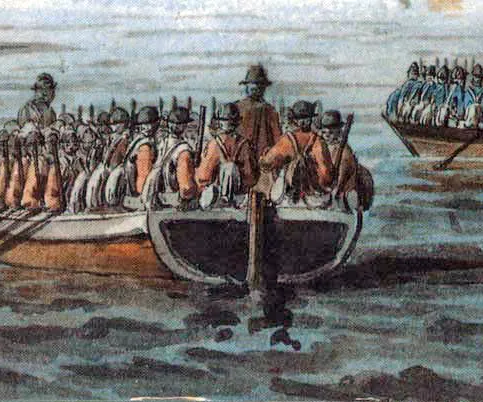
The most immediate concern, however, is our current disposition on Manhattan and Long Island. How the General, with a ragged army and no navy intends to defend a series of islands against George’s army backed by the world’s most powerful and experienced fleet is a mystery to me. The area we are tasked with defending is too vast and we are spread too thin and the Lion has complete freedom of movement along the rivers to flank us.

I feel this is a recipe for disaster. I pray that I am wrong.

Your servant,

Alby Louder.