
As Pittsburg celebrates its 150th birthday I’m looking back to its forerunner, Iowa City, which began when a group of weary pioneers settled at a site that would now be an extension of South Joplin Street to Cow Creek.
In 1865, Civil War veteran George Hobson homesteaded 160 acres in what now is Pittsburg’s Random Acres after a 6-week, 700-mile trip by wagon train from Hillsboro, Iowa with friends and relatives. There were some 14 prairie schooners in the party pulled by oxen.
Iowa City, Kansas was established 10 years before Pittsburg — in 1866 on the banks of Cow Creek, east of where the Meadowbrook Mall and Ron’s Supermarket are now located. A log cabin served as home and business until 1870, when a two-story structure was built to house the grocery store, post office, blacksmith shop and a meeting house.
Hobson travelled the old military road by wagon to Ft. Scott twice a week for mail (he was postmaster) provisions, patent medicines, and supplies for his store. Stamp sales (his pay as postmaster) amounted to $12 a year.
Legend has it that two horsemen — later identified through their mounts, their manners, and their general appearance — as bank robber brothers, Frank and Jesse James, stopped at the Hobson house one evening explaining they were hungry and wanted dinner.
Rather than accept Mrs. Hobson’s invitation to come inside, the rode their horses to the cover of one side of the house and asked her to bring their dinner there. The two horsemen dismounted, ate and then rode off.
A saloon that came into being on the corner diagonally from the St. Mary’s Cemetery was a popular but rowdy place for early settlers. Called “A Bucket of Blood”, it was the scene of frequent fights and blood was spilled on occasion.
When Independence Day 1866 came around, the settlers wanted to observe it but had no flag, so they made their own — cut from calico. 35 stars for the 35 states were sewn into a field of blue.
When the city of Pittsburg was platted in 1876 by Girard banker and entrepreneur, Franklin Playter, Hobson proposed that it be named Iowa City to correspond with the existing post office, but the name first chosen by Playter was New Pittsburg, in honor of Pittsburg, Pennsylvania.
He couldn't name it Pittsburg, as the name was already taken by a town in north-central Kansas. Not to be thwarted, Playter negotiated with that town's founder and, for the right price, purchased naming rights. In 1881, the town became Pittsburg.
By 1876, Iowa City had a school (a 16 by 20-foot log structure), a cabin called the “Lindel Hotel,” and the aforementioned ‘Bucket of Blood’ saloon and dance hall – all surrounded by a stockade. In August of 1876, it was torn down and for all practical purposes, Iowa City ceased to be.
The civic minded Hobson served in Pittsburg as Clerk (secretary) of School Directors in 1886, 1887, and 1889. He died April 5, 1891, and was buried, along with his son, John (who died two days earlier) in a corner of his land, south of what is now the main entrance of Highland Park & St. Mary’s Cemeteries.
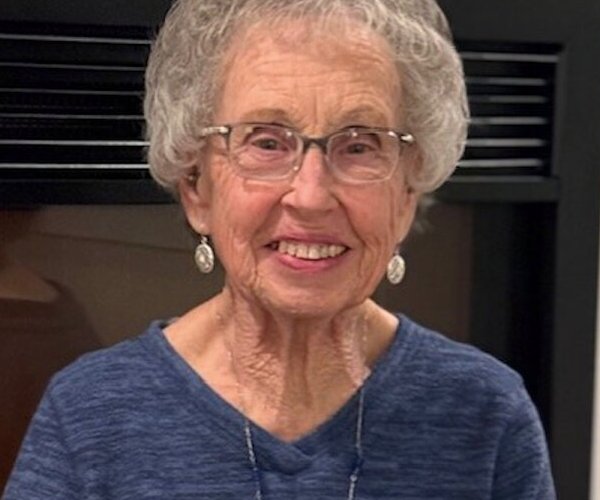
George and Amanda Hobson’s great-granddaughter, Corene Stroup, carried on the Hobson tradition over many years by serving on various committees to preserve Pittsburg’s history, architecturre and beauty.
Note: More information on the Hobson family (including George Hobson’s Civil War diaries) can be found PSU’s Special Collections located at Axe Library.
If you have a story or photo for Little Balkans Chronicles, contact me at 620-704-1309 or jtknoll@swbell.net