Author’s Note: In this installment, Albert “Alby” Louder bears witness to what he has feared most — open conflict with the Crown. DRS
April 19, 1775
Most esteemed Editor-at-large,
Today has seen the worst of all possibilities come to pass as Englishmen have spilled each other’s blood in Massachusetts. The Crown is no stranger to rebellious Englishmen as King George himself owes his position to the follies of his Stuart cousins a little more than a century ago.
But this war will not be fought in English countryside or the hedgerows of France, or even the backcountry of this continent. This is a war that will be, and insofar has been, fought in our very towns and villages, on our own farms and in our parlors. As I am no stranger to war, I know all too well the horrors to come.
But if we must suffer the coming deprivations to remain free, then so-be-it.
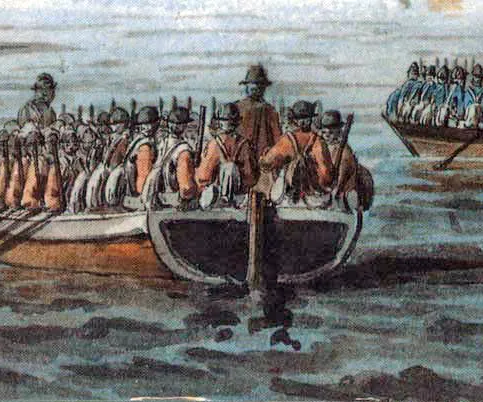
As forewarned, General Gage mounted another raid to confiscate cached arms presumed to be located in Concord. He ordered a sally of 700 of his finest Regulars drawn from the grenadier and light companies of 11 Regiments of Foot and His Majesty’s Marines, setting out from Boston proper at 3 a.m. by flatboat to Cambridge before marching on to Concord.
By 5 a.m., the first of His Majesty’s Marines had arrived at Lexington to be met by 80 men of the local militia under the command of Captain John Parker, who, previously warned by William Dawes the previous night and confirmed by his own scouts early that morning who offered no resistance nor provocation.
For a few brief moments, the mood was tense as the King’s officers ordered the “damned rebels” to quit their arms and disperse.
Then a shot rang out. No one knows from where or from whom the shot came, but the Regulars obliged with deadly accuracy. In seconds, the militia was set to flight with red-coated bayonets close behind. Eight men were left on the Lexington green, with 10 more grievously wounded.
Regaining control, the King’s officers collected their men and continued to Concord while, unbeknownst to them, word began to spread like wildfire through the countryside.
At Concord, the militia retreated, allowing the redcoats to search the village unmolested. Very little military contraband was found, excepting a pair of artillery carriages and a few cans of musket balls. The cans were tossed into the mill pond to be recovered later and the carriages burned, the smoke serving as an alarm for the waiting militia.
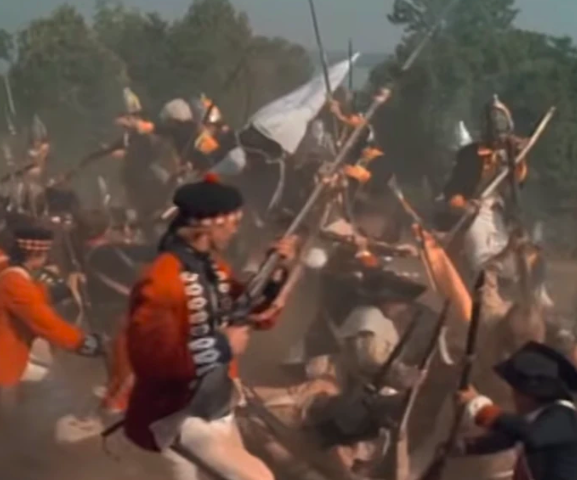
Ten companies totaling 400 militia began to advance on the Regular’s pickets along the North Bridge who loosed a volley killing five and wounding nine. But being outnumbered, the King’s men retired from the bridge, no less encouraged to do so by the return fire of the militia.
But this was only the beginning of the killing. The Regulars had the return march to Boston, a distance of nearly 18 miles, under the watchful gaze of growing numbers of agitated militia.
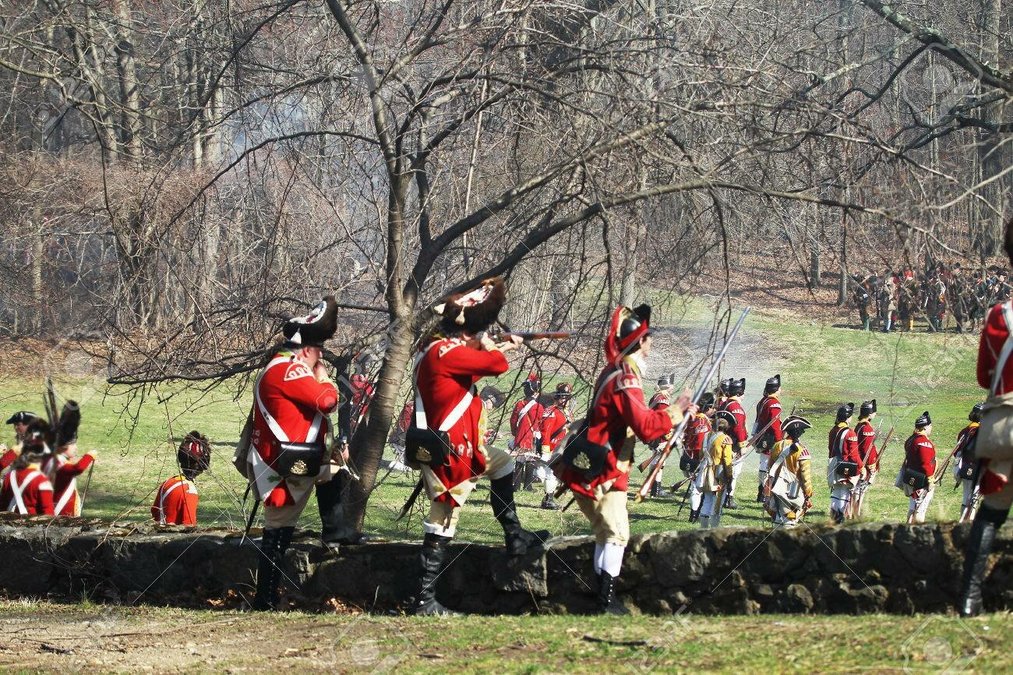
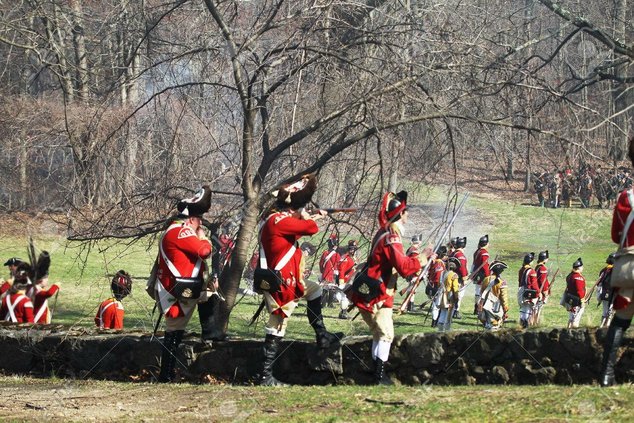
Along the entire route, militia hounded and harassed the Regulars, firing from the cover of trees and stone walls before darting ahead to reload and repeat the process.
Light troops spread out on the flanks of the column, attempting to drive the militia out of range, only to be ambushed themselves in the forests. Grenadiers secured the rear of the column, keeping the probing militia at bay. Marines formed the vanguard, clearing a path of retreat.
Farmers and merchants took refuge in homes, firing from windows and doors, forcing the Regulars to clear out each building along the road, an unenviable and dangerous task. Taking fire from all sides, casualties mounted, and ammunition dwindled.
More redcoats were dispatched from Boston with 1,000 men at 9 a.m. to relieve the beleaguered column, the two combining at Lexington and, with a pair of field pieces, clearly stated their intention to continue to Boston.
With nine miles yet to go, the combined force once again headed into the maelstrom of militia fire. Along the way, they were met by 78-year-old Samuel Whittemore, a veteran of the colony's militia for more than 30 years. Whittemore challenged the grenadiers of the 47th Foot, felling one with his musket and two more in quick succession with a pair of dueling pistols before overwhelmed. Suffering multiple wounds from shot and bayonet, the Grenadiers left him for dead on his front lawn. As the militia caught up, they found Whittemore reloading his musket with intent to rejoin the fight. He was taken instead to Dr. Tufts, who did not have a positive prognosis.
The butcher’s bill by the end of the day claimed 95 militia and 300 Regulars.
As night falls, one can hear the boots of more militia trudging toward Boston in the darkness as if an unstoppable force is about to collide with the immovable British Army. Campfires are dotting the fields like lightning bugs, slowly surrounding the city on three sides.
I fear this quarrel will not be satisfied quickly but, rather, have consequences that will echo through the ages.
God save us all.
Your obedient servant,
Alby Louder