By allowing ads to appear on this site, you support the local businesses who, in turn, support great journalism.
6. Taming the Wolves to Beat the Lions
Washington Takes Command
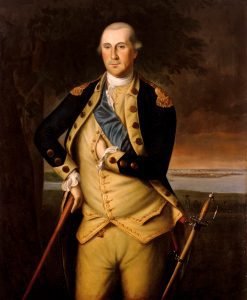
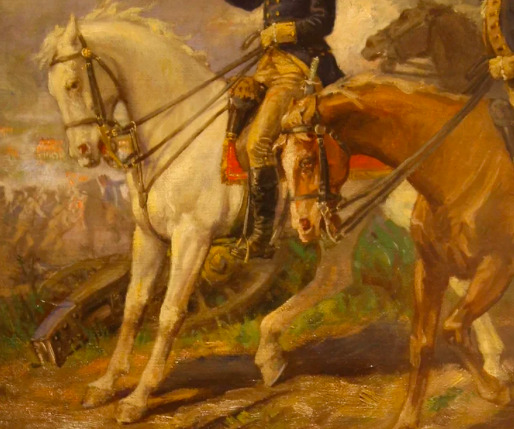
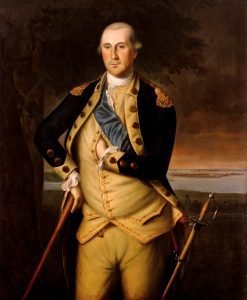
Virginia planter George Washington assumes command of the newly created Continental Army around Boston, 3 July 1775.

Author’s Note: Alby discusses the difficulties the rag-tag army faces and the arrival of a new general tasked with whipping them into shape.

July 15, 1776

Dearest Reader and Consumptor of my Ramblings,

It has been three weeks since the Young Lions were bloodied on Breed’s Hill and have yet to come out of hiding from under the loyal petticoats of Boston proper. In that time, our esteemed representatives to the Continental Congress have decided to adopt our army and sent forth a Virginia planter to command New England men.

This Virginia gentleman, who goes by the name George Washington, seems enough of a fine, handsome fellow, and a rather large one at that, standing a full head over everyone else. Despite his awkward size, he is an elegant man and many are in agreement that is the finest horseman in all 13 colonies and, as a young man, was a very fine catch for any young lass who caught his eye.

My apologies to the fine ladies of Massachusetts who may find themselves scheming for a companion as the General is a happily married and devoted man who resides on a fine plantation along the Potomac left to him by his older brother.

The General though is not simply a Southern gentleman accustomed to finery and luxury. As a young man, he worked as a surveyor and held a commission in the Virigina militia as a Leftenant-Colonel where he served under General Braddock during the disaster along the Monongahela. Rumor says that the brash actions of his youth are what caused the last row with the French in the first place.

Either way, he is no stranger to the hardships of campaigning.

It is said that many British officers owe their lives to then-Colonel Washington in extricating them from that French ambush, including General Howe, one of the King’s Lions now ensconced within Boston’s confines.

Almost immediately upon taking command, the General began making his mark in a herculean effort to transform this armed rabble into an Army, beginning with the officers. Washington made it incumbent of his officers to be of the highest moral fiber with unflinching courage in the face of the enemy. They are to set the example for their men and prioritize their needs over their personal desires.

Any who failed to do so are quickly found out. Courts martial are convened to punish both officers and private soldiers for dereliction of duty. Those found guilty are dismissed from the Army.

The General set about teaching the militia about basic soldiering. Personal cleanliness has become a priority as it prevents the spread of disease. Proper latrines have to be dug away from the camps and downriver so drinking water not become contaminated. Quartermasters have to relearn how to maintain accurate counts of powder, shot, firelocks, beef, salt, pots, pans, blankets, hay, oats, and everything else an Army needs to survive and fight. And a cohesive battle plan must be made, coordinating the efforts of the militias to rout the Lions out of Boston.

Even a clear chain-of-command needs to be established. Since the men arrived in their own clothes, no uniform exists within the Army, no way of telling captain from colonel. The only common badge of rank was a sash of any number of colors denoting officers from private soldiers. Here, too, the General had to intervene, developing a common means of distinguishing rank using a system of colored sashes, cockades, and epaulets. Each color denotes a specific rank and position within the Army, from corporal to the General himself.

It is a tall order for the Virginia gentleman. I hope he is up for the task.

Yours sincerely,

Albert Louder