Editor’s note: In the style and spirit of Silence Dogood and in acknowledgement of the upcoming United States Semiquincentennial, we look at the founding of this nation through the eyes of the fictional Albert Louder and others and explore the conflict from a personal perspective.
June 22, 1776
Fellow Patriots,
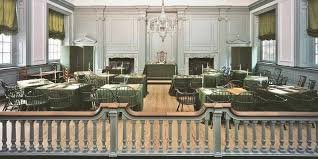
I come to you today from the confines of Philadelphia, having been sent here to deliver correspondence from the General to select members of Congress. And quite the experience it has been in meeting some of these illustrious men who collectively hold all our fates in their hands.
From local gossip and hearsay, I have gathered that negotiations in Congress have been a bit spicey of late, with not all of its members agreeing on a path forward. As late as last month, five colonies — New York, New Jersey, Maryland, Pennsylvania, and Delaware — have remained somewhat aloof from the rest in breaking all ties with the King and his crony Parliament.
The esteemed John Adams, from my own home of Massachusetts, railed against the transgressions of the current monarch, pointing out that he has refused every attempt at reconciliation and has even gone to great lengths to hire some of his German countrymen as mercenaries to quell our ever-growing revolt, for what was sparked in New England has now spread throughout the colonies.
All members of Congress agree that, at this point, reconciliation with the Crown is no longer achievable, leaving only full independence from that Crown as the only available course of action and despite this glaring conspicuousness, some are still reluctant to cut those ties as they have been instructed not to do so by their colonial legislatures.
Richard Henry Lee of Virginia agreed with that sentiment, putting it plainly that the colonies are and ought to be free and independent, being absolved from all allegiance to the Crown, and the connections between us should be totally dissolved.
In recent days, however, the resistance from the Middle Colonies has begun to weaken. In just the past week, the delegations of Delaware, Pennsylvania, and New Jersey have declared their support for full independence from the Crown.
But New Jersey did not come without casualty. The Royal Governor of the colony was declared an “enemy to the liberties of this country” and summarily ousted and imprisoned. The governor in question was William Franklin, a natural son of the storied Pennsylvania delegate Benjamin Franklin.
To date, only New York and Maryland hold out against complete independence, though the New York delegates have been instructed to answer neither in favor of nor against a vote for independence but to wait for further instructions.
With pressure mounting to decide, five men have been selected to write a draft detailing the reasons for separating from the Crown including Adams, Franklin, and a young Virginian by the name of Jefferson.
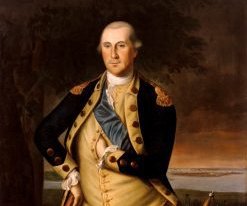
I have yet to meet the man, but I have seen him about. A lanky gentleman of over six feet, he is nearly as tall as the General in my estimation, though about 10 years his junior. He is an educated man, a graduate of William and Mary and is a member of the Virginia bar, from what I gather. Of late, he has been keeping to himself. Though he is generally in good humor, as of late it seems he bears the weight of the world.
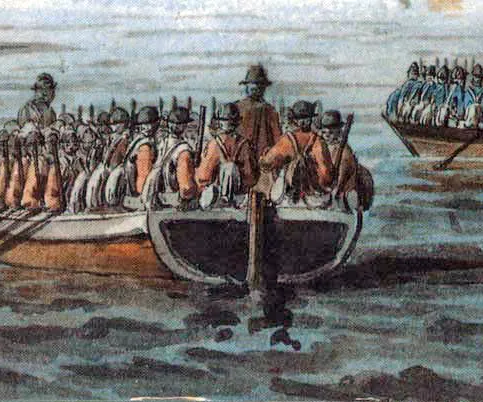
I do not expect too much to come of the current politicking in Congress, as politicians often move too slow to accomplish anything in a timely and meaningful manner. I am eager to return to my post in New York, as the situation there is growing more dangerous each day, as the Young Lion Howe is expected to return anytime.
But, alas, I am to stay on in Philadelphia for the time being, awaiting responses to the General’s postage, which I shall be obliged to return posthaste along with reports of any news, worthy of the name.
Your obedient servant
Alby Louder