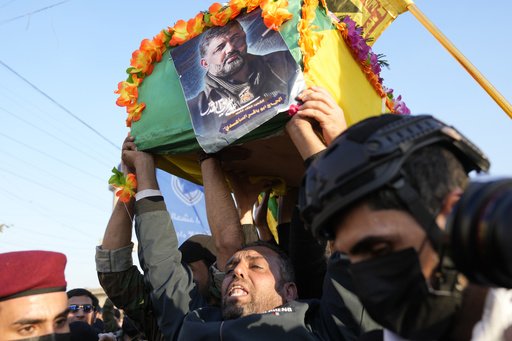
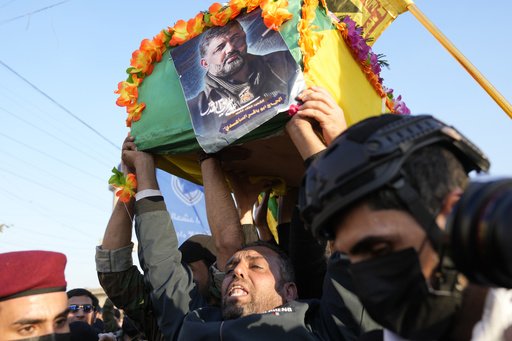
BEIRUT (AP) — A U.S. strike in Baghdad that killed a commander of the powerful Kataib Hezbollah paramilitary group this week highlighted the ambiguous status of the country's Iran-allied armed factions. Some operate simultaneously as a part of the official security forces and outside of state control. That has put the government of Prime Minister Mohammed Shia al-Sudani in an increasingly delicate position as it attempts to balance between its relations with the United States and with Iraqi armed groups that are sometimes in direct conflict with U.S. forces.
A look at the Iraqi government's relationship with armed groups that are clashing with US forces
Latest
-
 Olympic photo highlights from Day 10 of the Milan Cortina Winter Games
 -
 Gold for Elana! Meyers Taylor, 41, wins Olympic monobob title at Milan Cortina Games
 -
 The 'Blade Angels' are redefining the image of US women's figure skating
 -
 Austria wins gold in 1st Olympic men's super team ski jump as event is shortened due to weather