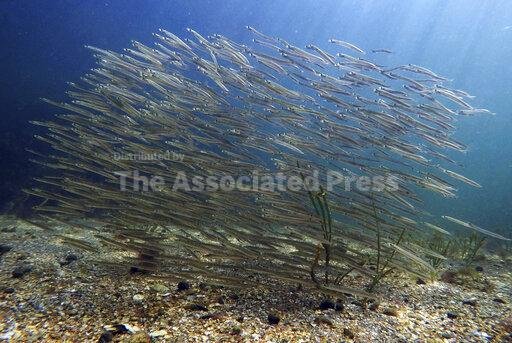
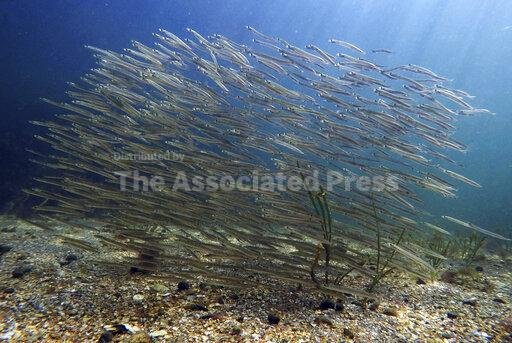
PORTLAND, Maine (AP) — The warming of the waters off the East Coast has come at an invisible, but very steep cost — the loss of microscopic organisms that make up the base of the ocean's food chain. The growing warmth and saltiness of the Gulf of Maine off New England is causing a dramatic decrease in the production of phytoplankton, according to Maine-based scientists who recently reported results of a yearslong, NASA-funded study. Phytoplankton, sometimes described as an “invisible forest,” are tiny plant-like organisms that serve as food for marine life.
Loss of tiny organisms hurts ocean, fishing, scientists say